
What Are Regulated vs. Unregulated Trading Providers?
What Are Regulated vs. Unregulated Trading Providers? When you decide to start trading forex, stocks, commodities, or other financial instruments, one of the most important decisions you will make is choosing who to trade with. Not all trading providers operate under the same rules or standards. Broadly speaking, they fall into two categories: regulated and […]
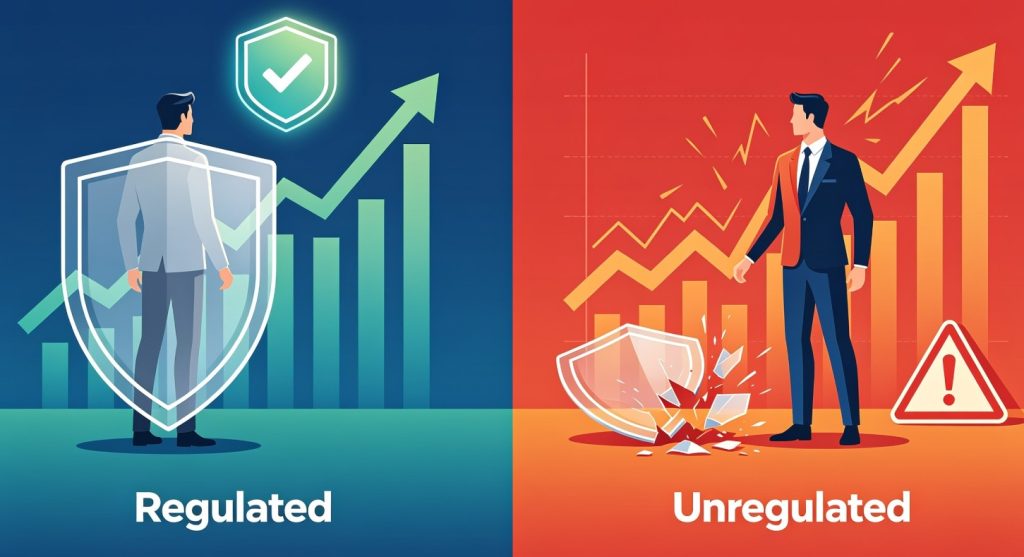
What Are Regulated vs. Unregulated Trading Providers?
When you decide to start trading forex, stocks, commodities, or other financial instruments, one of the most important decisions you will make is choosing who to trade with. Not all trading providers operate under the same rules or standards. Broadly speaking, they fall into two categories: regulated and unregulated providers. Understanding the difference between them is not just a matter of preference — it is a matter of safety, security, and long-term success.
In this detailed guide, we will explain exactly what each term means, how they differ, the risks and benefits involved, and how you can verify if a provider is properly licensed. This information is designed to help you make informed decisions and protect your investment capital.
Why This Matters: The financial industry is full of opportunities, but it also attracts bad actors. Trading with the wrong provider can lead to frozen funds, hidden fees, unfair pricing, or even total loss of your money. Knowing the difference helps you stay safe while trading.
What Is a Regulated Trading Provider?
A regulated trading provider is a company that has applied for, been granted, and maintains an official license from a government financial authority or regulatory body. These organizations are required to follow strict rules, guidelines, and standards designed to protect traders and ensure fair and transparent operations.
Regulation is not given freely; providers must meet high financial requirements, prove their business model is sound, and agree to regular audits and inspections. They operate under the supervision of authorities that have the power to enforce rules, issue fines, or even revoke licenses if the company fails to comply.
✅ Key Characteristics of Regulated Providers
- Legal Authorization: They hold a valid license issued by a recognized financial regulator.
- Capital Requirements: They must maintain a minimum amount of capital to ensure they can cover their obligations and protect client funds.
- Segregated Accounts: Client money is kept in separate bank accounts from the company’s operating funds, so it cannot be used for business expenses or debt repayment.
- Transparent Pricing: Spreads, commissions, fees, and execution policies are clearly stated and cannot be changed arbitrarily.
- Dispute Resolution: If there is a conflict between you and the provider, there is an official body you can complain to and seek resolution.
- Fair Trading Practices: They are prohibited from manipulating prices, delaying withdrawals, or misleading customers with false claims.
What Is an Unregulated Trading Provider?
An unregulated trading provider is a company that operates without any official license or supervision from a recognized financial authority. These companies may still have a website, offer trading platforms, and advertise services, but they are not bound by any legal or industry standards.
Some unregulated providers choose not to apply for licenses because they do not meet the strict requirements, while others intentionally operate in jurisdictions with no oversight. This means there is no external organization checking their actions, no rules they must follow, and no guarantee that they will treat their clients fairly.
❌ Key Characteristics of Unregulated Providers
- No Official License: They cannot provide a valid registration number or proof of supervision by a reputable regulator.
- No Capital Safeguards: There is no requirement to hold enough capital, meaning they could become insolvent without warning.
- Funds at Risk: Client money is often mixed with company funds, making it vulnerable if the business faces financial trouble.
- Unclear Terms: Fees, spreads, and withdrawal rules can change suddenly without notice or explanation.
- No Recourse: If they refuse to process your withdrawal, manipulate trades, or close your account unfairly, there is no government agency to turn to for help.
- High Risk of Fraud: Many scams and Ponzi schemes operate under the guise of unregulated trading platforms.
Side-by-Side Comparison: Regulated vs. Unregulated Providers
To make the difference even clearer, here is a direct comparison of how the two types of providers operate:
| Feature | Regulated Provider | Unregulated Provider |
|---|---|---|
| Legal Status | Officially licensed and authorized | No official license or legal oversight |
| Fund Protection | Client funds held in segregated bank accounts | Funds usually kept in company accounts |
| Financial Security | Must maintain minimum capital reserves | No capital requirements |
| Transparency | All fees, costs, and rules are clearly published | Terms may be hidden or changed without warning |
| Withdrawals | Processed according to stated policies | May delay, block, or refuse withdrawals |
| Dispute Help | Access to official complaints and arbitration | No official authority to resolve issues |
| Risk Level | Low to moderate risk | Very high risk of loss or fraud |
Major Financial Regulatory Bodies Around the World
When checking if a provider is legitimate, look for regulation from one of these well-known and respected authorities. These organizations have strict standards and are trusted globally:
- FCA (Financial Conduct Authority) – United Kingdom
- ASIC (Australian Securities and Investments Commission) – Australia
- CySEC (Cyprus Securities and Exchange Commission) – European Union
- CFTC & NFA (Commodity Futures Trading Commission / National Futures Association) – United States
- FSCA (Financial Sector Conduct Authority) – South Africa
- FSA (Financial Services Agency) – Japan
- DFSA (Dubai Financial Services Authority) – UAE
Being regulated by one of these bodies means the provider is subject to international standards and must operate with integrity.
How to Verify If a Trading Provider Is Regulated
Claiming to be regulated is easy; proving it is what matters. Follow these simple steps to confirm the status of any provider before opening an account:
- Ask for the License Number: Every regulated provider must display their license number and regulator name clearly on their website, usually in the footer or “About Us” section.
- Visit the Regulator’s Official Website: Go directly to the regulator’s public register and search for the company name or license number. Do not trust links provided only by the provider themselves.
- Check the Scope of License: Confirm that the license actually allows them to offer the specific trading services you want to use.
- Watch for Copycats: Some scam sites use names similar to real regulated companies. Always double-check the exact legal name and address.
- Use Independent Reviews & Comparisons: To save time and get reliable insights, you can also check detailed information and comparisons on trusted platforms such as broker reviews and ratings from verified sources.
- Read Reviews Carefully: Look for independent feedback about withdrawal speed and customer service, but focus on facts rather than promises of easy profits.
Common Myths About Regulation
There are some misleading ideas spread online, especially by unregulated providers, to convince traders to ignore safety rules. Let’s clear them up:
Myth 1: “Regulated providers have higher fees and worse conditions”
While some regulated providers may have slightly higher costs, this is the price of safety. Lower fees offered by unregulated companies often come with hidden charges, wider spreads, or the risk of never seeing your profits. In the long run, trading with a regulated provider saves you money and stress.
Myth 2: “Regulation limits your ability to trade”
Regulation does not stop you from trading; it only sets rules to protect you. It ensures you get fair pricing, your orders are executed correctly, and your funds are secure — all things that help you trade more effectively.
Myth 3: “If a website looks professional, it must be safe”
Anyone can build a professional-looking website today. Design quality has nothing to do with regulation or trustworthiness. Many scam sites have very polished websites, but no legal standing.
Final Thoughts
Choosing between a regulated and unregulated trading provider is one of the most important decisions you will make. A regulated provider offers you a safe environment, legal protection, and peace of mind — allowing you to focus entirely on your trading strategy. An unregulated provider, on the other hand, puts your capital at risk and leaves you with no protection if something goes wrong.
Remember: In trading, profit is important, but safety comes first. Never trade with a provider until you have confirmed their license and reputation. Taking the time to do this simple check can save you from losing all your investment.
Disclaimer: This content is for educational and informational purposes only and does not constitute financial advice, investment recommendation, or endorsement of any specific trading provider. Trading financial instruments involves significant risk of loss and is not suitable for all investors. Past performance is not indicative of future results. Always verify the regulatory status of any service provider and consult a qualified financial advisor if needed.